

Gulf Islands National Seashore is the nation’s largest national seashore, stretching 160 miles from Cat Island in Mississippi to Destin, Florida. Its closest Florida area, Naval Live Oaks in Gulf Breeze, is a 40-minute drive from Splash RV Resort. This winter, a $25 private vehicle pass buys a full week of entry at Johnson Beach, Fort Pickens and Opal Beach, and every Florida area is open again after Hurricane Isaias.
Planning a seashore day from Splash RV Resort? You probably want to know which area to pick, what it costs, whether the motorhome can come along, and what’s open after the storm. This guide answers each one with real hours, fees and drive times from our gate on Welcome Church Road.
Gulf Islands National Seashore at a glance
- Size: 160 miles of coastline across Florida and Mississippi, and Congress established the seashore on January 8, 1971.
- Entrance fee: $25 per private vehicle wherever the park collects fees, and it’s a cashless park.
- Winter hours: the entrance station gates at the Fort Pickens and Perdido Key areas run from 5 a.m. until 6 p.m. between November 1 and February 28, while Opal Beach, Naval Live Oaks and Okaloosa welcome visitors from 8 a.m. until sunset.
- Storm status: open, with Naval Live Oaks the last Florida area to reopen on Oct. 26.
- Crowds: the National Park Service logged 7,576,923 recreation visits during 2025.
- From Splash RV Resort: roughly 40 minutes to Naval Live Oaks in Gulf Breeze.
Is Gulf Islands National Seashore open after Hurricane Isaias?
Gulf Islands National Seashore is open. The park reopened its Naval Live Oaks Area on Oct. 26, 2026, and its reopening release that day confirmed every other area was already welcoming visitors, Okaloosa, Opal Beach, Johnson Beach, Fort Pickens and Fort Barrancas included.
Superintendent Rick Clark said in that release that the park held up well compared with earlier hurricanes, and he was specific about it: “Isaias caused no substantial damage to buildings or infrastructure in the park’s Florida or Mississippi Districts.”
A few spots stay closed for other reasons, according to the park’s current conditions page. The Fort Pickens Discovery Center is closed for construction and exhibit renovations, though the historic fort itself is open. Safety closures also cover Battery Cooper and the Battery 234 Loop Road until further notice. Pull up that page the morning you go, since the park notes on its campground details page that Fort Pickens Road is subject to flooding.
How much does it cost to visit Gulf Islands National Seashore?
A private vehicle pays $25 to enter Gulf Islands National Seashore, and that one pass covers up to six people for seven days at Fort Pickens, Johnson Beach or Opal Beach. Motorcycles pay $20, and anyone 16 or older who walks or bikes in pays $15. The park is cashless, so keep a card handy at the entrance station.
Not every area charges. Fort Barrancas doesn’t have an entrance fee, and Naval Live Oaks isn’t listed among the park’s fee areas. Okaloosa has no entrance station, so the park asks visitors to pay at the collection box near the boat ramp or buy a pass online.
Timing tip: Veterans Day, November 11, is the last date on the National Park Service’s 2026 entrance fee-free list. Beginning in 2026, free entrance on those days is for U.S. citizens and residents only.
Which area of Gulf Islands National Seashore should you visit?
Pick Fort Pickens for history, Opal Beach for the easiest beach day from the Navarre Beach side, and Naval Live Oaks for shaded trails close to home. Here’s how the six Florida District areas compare, with approximate drive times from Splash RV Resort.
One heads-up on that last row: Fort Barrancas sits aboard an active Navy base, so you’ll come in through the Naval Air Station Pensacola West Gate with a 100% ID check, and the last entry to the fort is 3:30 p.m.
What is there to do at Fort Pickens?
Fort Pickens is the seashore’s headline stop, a brick fort that workers began in May 1829 and finished in October 1834. The National Park Service notes that at its completion, Fort Pickens was the largest brick structure on the Gulf of Mexico. The fort gate opens at 8 a.m. and stays open until sunset all year, so you can explore at your own pace.
The stories inside those walls are the real draw. Federal forces moved into Fort Pickens on January 10, 1861, the same day Florida seceded from the Union, per the park’s Fort Barrancas history. Decades later the fort held Geronimo and 15 other Apache men as prisoners, according to the park’s Apache prisoners history, and their families were reunited at Fort Pickens in 1887.
A few practical notes for the Fort Pickens Area:
- You’ll find passport stamps and junior ranger booklets at the park store inside the fort, open from 9 a.m. until 4:30 p.m.
- Langdon Beach has restrooms, outdoor showers, parking and a pavilion, with a lifeguard only from Memorial Day to Labor Day.
- You can fish the Fort Pickens pier without your own license because it’s a licensed pier.
- The park counts 5 miles of biking road in the Fort Pickens Area.
- Overnight parking isn’t permitted, so day visitors head out by closing.
Getting there means crossing the Bob Sikes Bridge onto Pensacola Beach, where Escambia County collects a $1 electronic toll and cash and coins aren’t accepted. Budget about 70 minutes each way from Splash RV Resort and you’ll have plenty of daylight for the fort, even on a short winter day.
Can you camp at Gulf Islands National Seashore?
Yes, the seashore runs Fort Pickens Campground inside the Fort Pickens Area, where an electric site costs $40 a night and a non-electric site costs $26, with the entrance fee charged separately. Sites book on Recreation.gov up to six months ahead, and campers can stay no more than 14 consecutive days and 42 days a year.
Camping here is popular. Gulf Islands counted 173,473 overnight stays in 2025, and the park says that made it the 3rd most visited RV campground among all national park sites nationwide. Its C-loop takes tents, pop-ups, trailers and RVs, with power and water hook-ups at each site, and generators aren’t permitted there. Check the details on the park’s camping fees page before you book.
That 14-day limit is the catch for winter RVers who want to stay put for a month or more. At Splash RV Resort, our monthly snowbird rates for the November to February rate season start with standard back-in sites at $1,299 a month. Each of our full-hookup RV sites has 50-amp service, and the pads and roads are all concrete, so you can park the rig once and day-trip to the seashore all winter.
What will you find at Opal Beach?
Opal Beach is the swim beach in the seashore’s Santa Rosa Area, on Highway 399 (J. Earle Bowden Way) between Pensacola Beach and Navarre Beach. The Opal Beach complex has public restrooms, parking lots, outdoor showers and pavilions, and it opens daily from 8 a.m. until sunset. Plan on roughly a 45-minute drive from our gate.
Here’s the tip RVers need: there’s no oversized or RV parking at Opal Beach, so leave the motorhome on its site and bring the tow car. Highway 399 itself stays open 24 hours a day, year-round, and numerous parking lots along it offer beach access with no entrance fee. Cyclists get 7 miles of park road in the Santa Rosa Area, too.
Keep your winter expectations realistic. Lifeguards may be on duty only during the summer season, mid-May through August, and the November average water temperature in Pensacola is 71.6°F. In winter, Opal Beach is at its best for long walks, shelling and sunsets.
What can you do at Naval Live Oaks in Gulf Breeze?
Naval Live Oaks is the wooded side of Gulf Islands National Seashore, with 7.5 miles of hiking trails, including the fully accessible 0.8-mile Brackenridge Nature Trail. The Naval Live Oaks Area also has a picnic area with tables, grills, restrooms, parking and a view of the sound. The south gate on Highway 98 opens at 8 a.m. and shuts at sunset, and since it’s only a 40-minute drive, it’s the closest seashore area to Splash RV Resort.
This peninsula has a surprising backstory. In 1828, the first national tree farm, called Naval Live Oak Reservation, was established between Pensacola Bay and Santa Rosa Sound, according to the park’s live oak history, to secure live oak timber for building Navy warships. The longest walk here is the Andrew Jackson Trail, 4.8 miles as an out-and-back, and dogs are allowed on it.
There are no concessions, so pack lunch and water. Pets are welcome on the trails and bike paths at Naval Live Oaks, but not on the beach or in the sand.
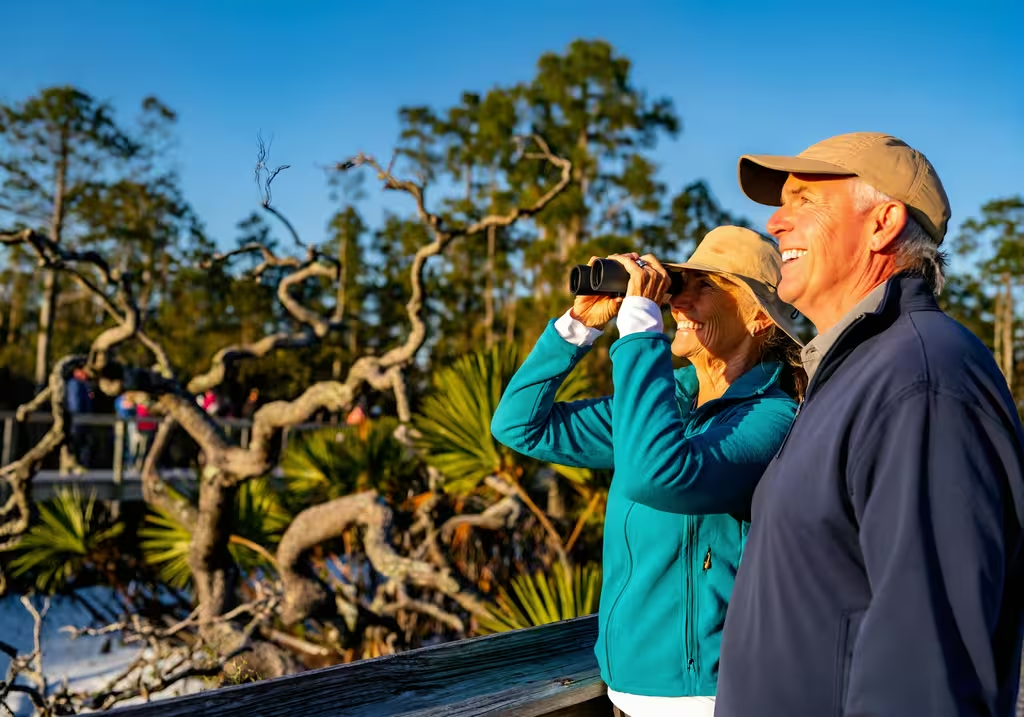
Bring binoculars, especially in winter! The park’s bird guide calls the piping plover “Florida’s original snowbird,” and Gulf Islands is a stopover for migrating birds, a place where they can rest and feed before continuing on their migration.
Where is Johnson Beach on Perdido Key?
Johnson Beach is the heart of the seashore’s Perdido Key Area. To get there, follow Highway 292 across the bridge to Perdido Key and turn left onto Johnson Beach Road, roughly an hour’s drive from our gate. Winter hours run from 5 a.m. until 6 p.m., the same $25 vehicle pass applies, and the area offers neither roadside parking nor RV parking, so bring the car and use the three lots along the road.
The road continues about 1.5 miles to a turnaround, and after that point the barrier island continues but is only accessible by foot or by boat. The beach carries the name of a local hero. Per the park’s Rosamond Johnson history page, Rosamond Johnson was the first soldier from Escambia County, Florida, to die in the Korean War, and he was 15 when he lied about his age to enroll in the U.S. Army.
Watch your step in the dunes, too. This species of beach mouse lives only on Perdido Key, and the park’s Perdido Key beach mouse page says it has been federally protected under the Endangered Species Act since 1985. Pets aren’t allowed on the beach here.
What is the Okaloosa Area of Gulf Islands National Seashore?
The Okaloosa Area is a day-use spot between Destin and Fort Walton Beach, and because it sits apart from the other Gulf Islands locations, the park says it’s typically less crowded. The Okaloosa Day Use Area offers outdoor showers, restrooms, parking, picnic tables and a small craft launch with access to Choctawhatchee Bay, and it’s open daily from 8 a.m. until sunset.
There’s no entrance station, so pay at the collection box near the boat ramp or buy your pass online before you go. It’s about an hour east of Splash RV Resort, which makes it an easy pairing with lunch in Destin or Fort Walton Beach.
When should you visit Gulf Islands National Seashore in winter?
November is the mildest winter month for a seashore day, since NOAA’s climate normals put Pensacola’s average highs at 71.8°F and its lows at 51.0°F. The park calls December through February its cool season, when average daily highs stay below 66°F and lows average 45°F, according to its weather page. Pack layers and plan around history, trails and birding.
December is cooler still, with 65.1°F highs and 45.9°F lows in those same NOAA normals, which is honestly perfect fort-exploring weather. One scheduling note: all national seashore facilities close on New Year’s Day, Thanksgiving and Christmas Day.
So make Thanksgiving your resort day. Thanksgiving week at Splash RV Resort means a Thanksgiving Day Camper Potluck on the holiday itself, along with Pictures with Santa, a scavenger hunt and live music, and you’ll find the full lineup on our events calendar.
Where should you stay near Gulf Islands National Seashore?
The best base camp for Gulf Islands National Seashore keeps most areas within an hour, lets you leave the rig parked, and gives you something fun to come home to. Splash RV Resort, conveniently located near I-10 in Milton, does all three: Naval Live Oaks is roughly 40 minutes away, Opal Beach about 45, and Navarre Beach 25 minutes and 25 miles.
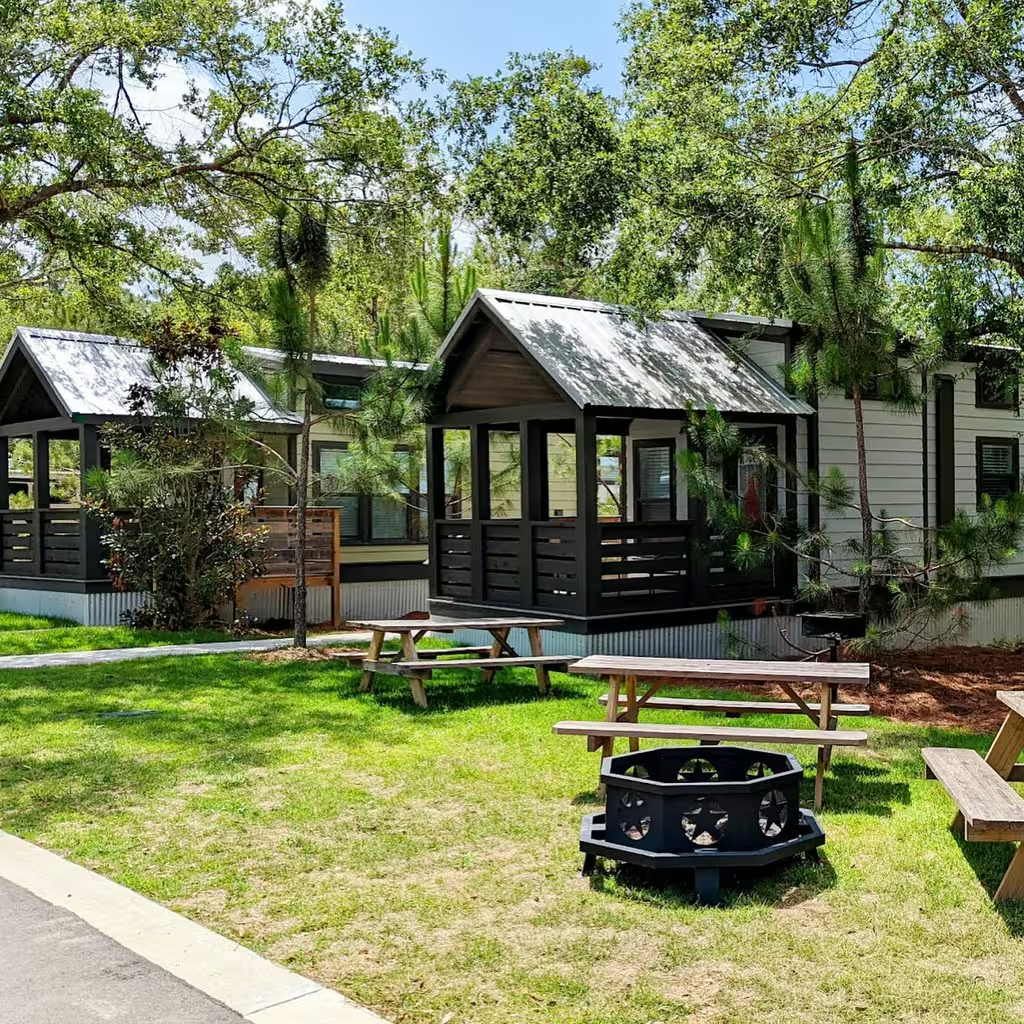
Our luxury cottages and Conestoga glamping wagons make sense if you’re flying in or want a break from the rig. Pets are allowed in RVs, and select cottages welcome them with a $200 pet fee. WiFi at our RV sites is complimentary and fast enough for streaming, which helps on evenings you’re mapping out tomorrow’s route.
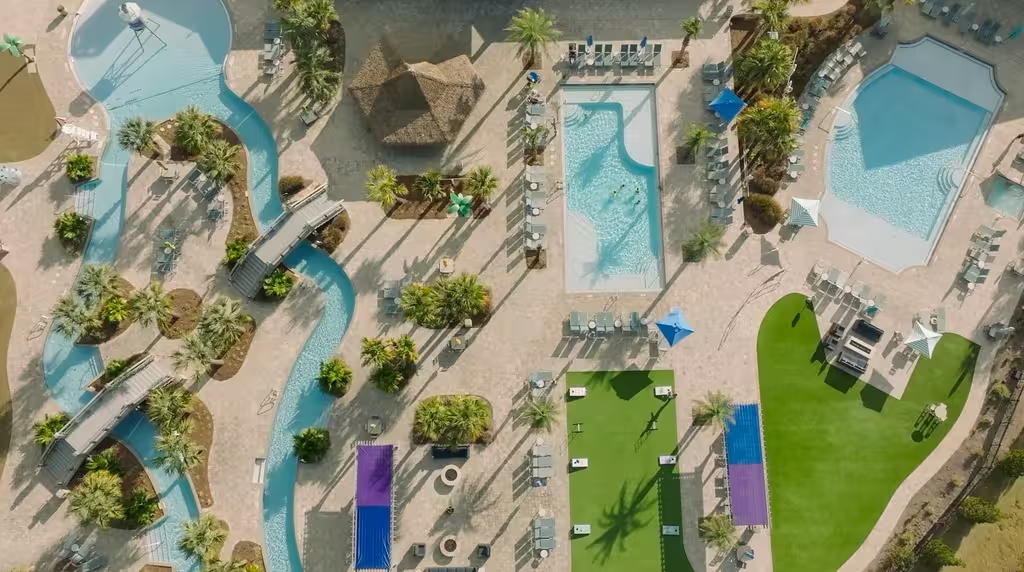
Visiting in December? Christmas Cottages and Wagons are available Thanksgiving week through December 31st. Our heated family pool is waiting when the day trip wraps up, and the seasonal hot tub opens 1 week after Labor Day and keeps going until the week before Memorial Day. For more ideas between seashore days, our local guide rounds up things to do around Pensacola and Navarre Beach.
Frequently asked questions
Leashed dogs can join you on the trails, the multi-use paths and the park roads, and the leash can’t be longer than six feet. Dogs aren’t allowed on the beaches, in the forts, on the fishing piers or inside visitor centers.
The seashore stretches 160 miles from Cat Island in Mississippi to Destin, Florida. That makes it the nation’s largest national seashore.
In most of the park, yes, because Florida fishing regulations apply in the seashore’s Florida waters. The Fort Pickens fishing pier is the exception, since it’s a licensed pier.
No, the Opal Beach complex has no oversized or RV parking. Leave the motorhome at your campsite and drive your tow vehicle to the beach.
No. Every national seashore facility closes on Thanksgiving, and the park stays closed on Christmas Day and on New Year’s Day too.
No. Lifeguards may be on duty only during the summer season, from mid-May through August, so winter visitors should check the beach flags and stay cautious about rip currents.
Ready to plan your Gulf Islands National Seashore trip?
Naval Live Oaks sits roughly 40 minutes from our gate, Navarre Beach takes 25 minutes over 25 miles, and downtown-bound drivers reach Pensacola’s 23 miles in about 27 minutes, so the whole Florida side of the seashore fits into easy day trips. Grab a full-hookup site, one of the luxury cottages or a Conestoga wagon, then pick your dates through Splash RV Resort’s reservation system. Trust us, after a day at Fort Pickens you’re gonna love coming back to your own site and those heated pools!